For local contractors, balancing cost, efficiency, and flexibility is a constant challenge. Projects are often smaller in scale, dispersed across different locations, and subject to tight margins. In this context, interest in small concrete batching plants sale has grown steadily, as contractors look for practical ways to secure concrete supply without the high capital burden of large-scale facilities. But is investing in a small batching plant truly a smart decision? Understanding the operational and economic realities can help answer this question.

Local contractors typically serve residential construction, small commercial buildings, village roads, drainage systems, and minor infrastructure works. These projects rarely justify the continuous output of large ready-mix plants. Dependence on external suppliers can also create delays, especially in rural or semi-urban areas where delivery schedules are inconsistent.
A small RMC plant offers an alternative by enabling on-site or near-site production. Instead of waiting for trucks or paying premium transport fees, contractors gain control over both timing and volume. This shift from purchasing concrete to producing it internally can fundamentally improve project scheduling and cost predictability.
One of the strongest arguments in favor of small concrete batching plants sale is affordability. Compared with medium or large batching systems, small plants require significantly lower capital investment. Equipment costs, foundation work, electrical capacity, and installation expenses are all reduced.
For many local contractors, this lower entry barrier makes ownership feasible for the first time. A small RMC plant is often designed with simplified structures and integrated components, reducing setup complexity and commissioning time. Faster commissioning means the plant starts generating value earlier, shortening the payback period.
In many cases, contractors find that savings from reduced concrete purchasing and transportation costs alone can offset the investment within a relatively short operational window.
Another key factor is capacity matching. Small concrete batching plants are typically designed to produce between 20 and 60 cubic meters per hour, which aligns well with the daily requirements of local projects. Overcapacity in a large plant often leads to idle time, wasted energy, and unnecessary maintenance costs.
A small RMC plant allows contractors to produce concrete in batches that closely match job site demand. This precision helps reduce material waste and avoids the challenges of managing excess fresh concrete. For contractors handling multiple small jobs simultaneously, the plant’s flexible output supports better resource allocation across sites.
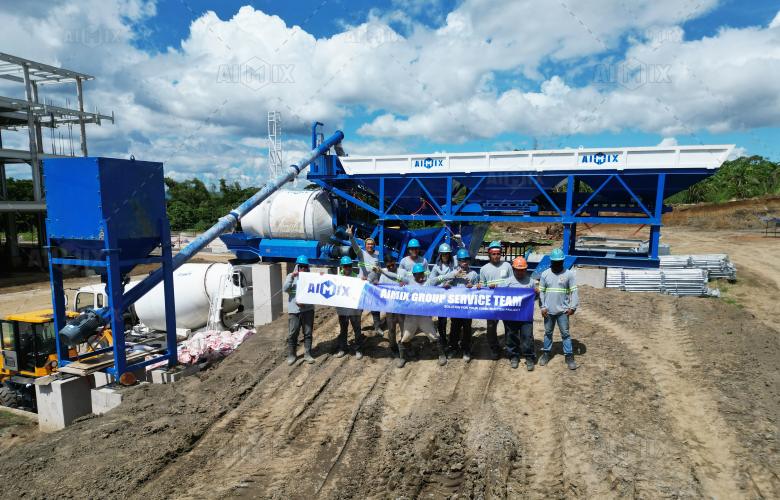
Local contractors may not have access to highly specialized plant operators. Small batching plants are generally designed for straightforward operation, with user-friendly control systems and fewer manual adjustments. Automated weighing and mixing functions reduce dependency on operator experience while improving consistency.
A small RMC plant also requires fewer personnel to operate and maintain. With lower labor requirements, contractors can manage production using existing teams rather than hiring additional specialists. This operational simplicity is especially valuable in regions where skilled labor is scarce or costly.
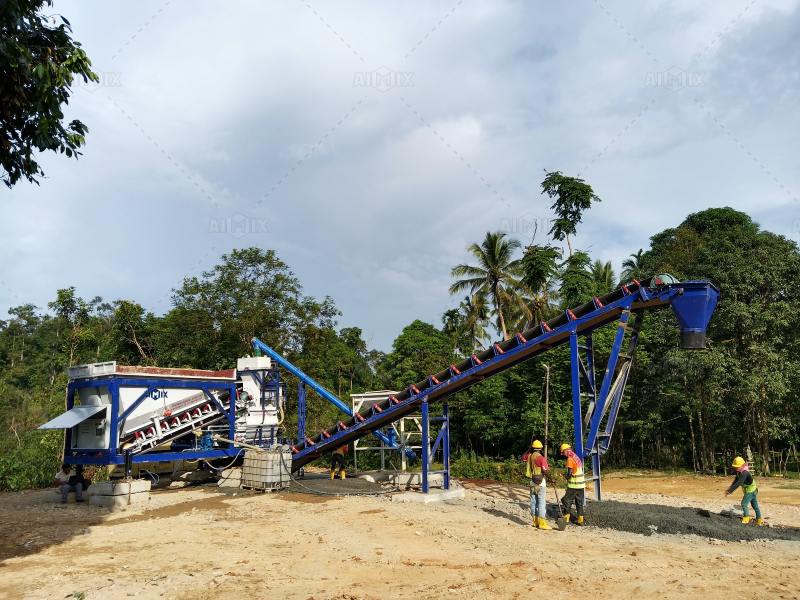
Many small concrete batching plants are available in mobile or semi-mobile configurations. This mobility allows contractors to relocate the plant as projects change, rather than being tied to a single fixed location. For local contractors working across multiple towns or districts, this flexibility significantly enhances asset utilization.
A mobile small RMC plant can be deployed closer to the construction site, reducing haul distances and minimizing concrete quality loss during transport. This adaptability strengthens competitiveness, as contractors can bid on projects in remote or logistically challenging areas with greater confidence.
While the benefits are compelling, investing in small concrete batching plants sale is not without challenges. Small plants have limited output capacity and may struggle to meet peak demand on larger or fast-paced projects. Contractors must also consider ongoing costs such as maintenance, spare parts, and compliance with local environmental regulations.
Additionally, owning a small RMC plant requires basic production management, including raw material sourcing and quality control. Contractors who lack experience in concrete production may need initial training to fully realize the plant’s potential.
Despite these limitations, small batching plants can play a strategic role in long-term business growth. Ownership provides greater control over quality, scheduling, and pricing. Some local contractors even expand into supplying ready-mix concrete to nearby projects, creating an additional revenue stream.
In this way, a small RMC plant becomes more than just equipment—it becomes a platform for business diversification and resilience in a competitive market.
For local contractors, investing in small concrete batching plants sale can be a smart and practical decision when aligned with project scale and business goals. With lower upfront costs, right-sized capacity, operational simplicity, and mobility, a small RMC plant offers tangible advantages over reliance on external suppliers. While careful planning is required, especially regarding demand and compliance, the investment can significantly enhance efficiency, control, and long-term profitability for local construction businesses.


